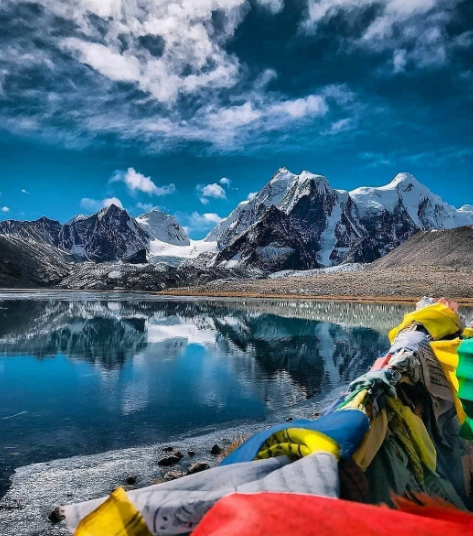
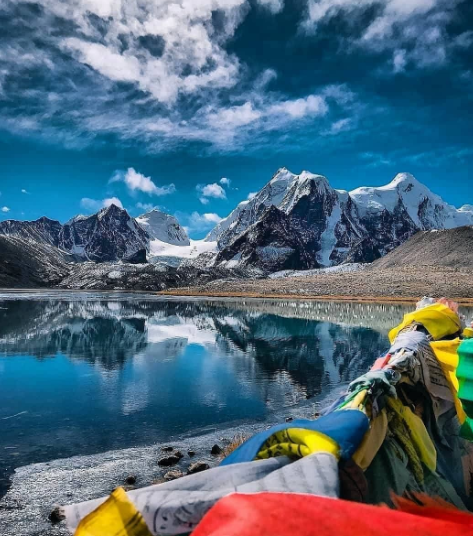
One of Uttarakhand's most captivating and spiritually significant trails is the Nandi Kund Trek, which is tucked away deep in the Garhwal Himalayas. This walk is the ideal fusion of adventure and devotion because it is blessed with ancient mythology, vibrant alpine meadows, beautiful glaciers, and breathtaking mountain views. Few routes in Uttarakhand have the mystique, cleanliness, and tranquility of Nandi Kund trek, a sacred lake thought to be connected to Lord Shiva's cherished bull, Nandi, despite the fact that several lead to high-altitude lakes.
📍 Where Is Nandi Kund Trek Located?
Nandi Kund is located in the Rudraprayag district of Uttarakhand, at the upper parts of the Madhmaheshwar Valley. At a height of almost 4,800 meters, this enigmatic lake is surrounded by the majestic peaks of the Mandani, Kedarnath, and Chaukhamba ranges. Trekking through dense forests, traditional Himalayan communities, high-altitude meadows, glacial moraines, and ridge-top climbs is necessary to reach this holy location; the trip is equally gratifying as the destination.
✨ The Mythology Behind Nandi Kund Trek
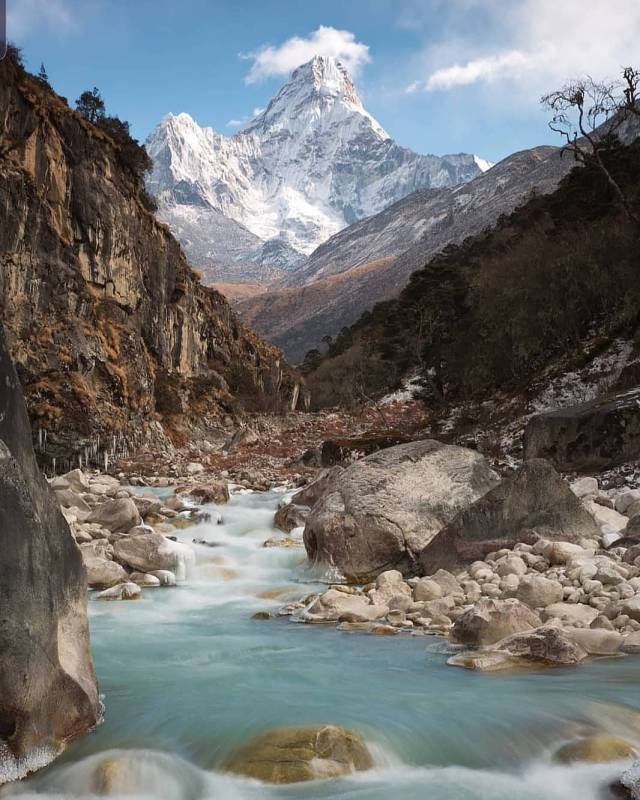
Legends from Hindu texts abound on the journey. The sacred bull and vehicle of Lord Shiva, Nandi, is said to have meditated in this area. The lake's spiritual significance is further increased by the belief that it is the source of the Madhmaheshwar Ganga.
The Panch Kedar temple in Madhmaheshwar, which is close by, is thought to be where Lord Shiva's navel first appeared when he transformed into a bull to avoid the Pandavas. After visiting Madhmaheshwar, many pilgrims proceed to Nandi Kund in search of a more profound spiritual experience.The walk is a living blend of history, devotion, and unspoiled Himalayan nature because it is said that the Pandavas roamed these meadows during their banishment.
🌄 Why Nandi Kund Trek Is Truly Special
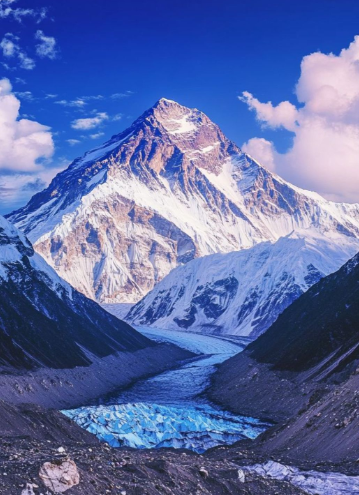
Nandi Kund's blend of spirituality, Himalayan wildness, and stunning high-altitude scenery is what really sets it apart. In contrast to the busier paths like Valley of Flowers or Kedarnath, Nandi Kund provides:
- Peace and seclusion away from commercial tourism
- Unspoiled fields such as Pandavsera and Kachni Tal
- Seldom seen wildlife: fox, musk deer, bharal, and Himalayan monal
- Close-up views of famous peaks: Panpatia, Mandani, and Chaukhamba
- An opportunity to engage with real Garhwali culture
It is an immersive trip via tales, customs, spirituality, and the natural world rather than merely a hike.
📅 Best Time to Visit Nandi Kund Trek
When is the best time to go on the Nandi Kund Trek?
✔ June – Mid July
- Pleasant weather
- Lush meadows blooming with wildflowers
- Clear mountain views
✔ September – October
- Post-monsoon freshness
- Crystal-clear skies
- Best visibility for peak photography
Due to snow-covered paths, the lake is inaccessible during the winter and stays frozen.
🧭 Nandi Kund Trek Route Overview
The final motorable settlement on the way to Madhmaheshwar is Ransi, where the walk usually starts. The majority of itineraries take this path:
Madhmaheshwar → Ransi → Gaundhar → Bantoli → Kachni Khal → Pandavsera → Nandi Kund
The track is moderately challenging, with multi-day high-altitude trekking beyond civilization and steep ascents after Madhmaheshwar.
🏞️ Day-by-Day Comprehensive Schedule (7 Days)
📍 Day 1: Ransi to Gaundhar (6–7 km)

Ransi, a serene Garhwali village with beautiful valley vistas, is where your journey starts. The walk crosses wooden pathways, modest bridges, and traditional homes as it progressively descends towards Gaundhar. For the most of the trip, the Madhmaheshwar Ganga's sound follows you.
Highlights:
Conventional Garhwali villages
Trails through forests
Views of rivers
📍 Day 2: Gaundhar to Madhmaheshwar Temple (10–12 km)
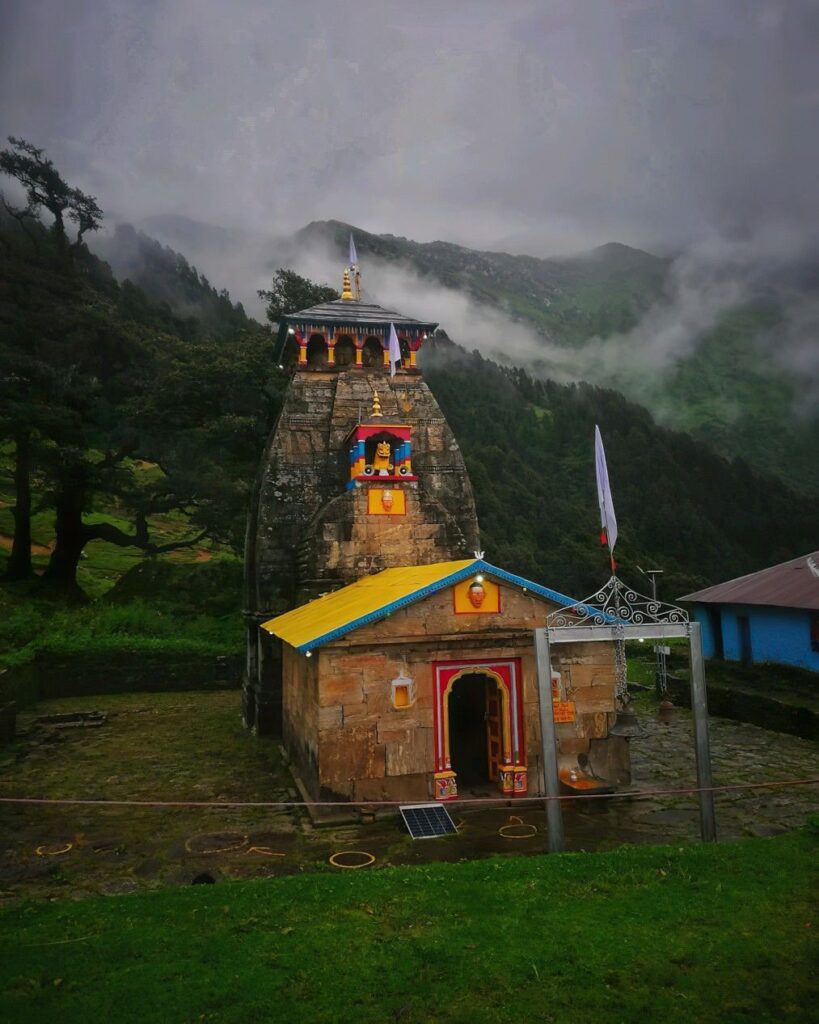
There is a lengthy yet picturesque climb in this section. Huge fields replace dense trees as you get closer to Madhmaheshwar. At last, among breathtaking alpine scenery, you arrive at the hallowed Madhmaheshwar Temple.
Highlights:
Ancient Shiva temple
Mesmerizing Bugyals
Possibility of seeing Rudra Abhishek in the evening
Day 3: Madhmaheshwar to Budha Madhmaheshwar & Back
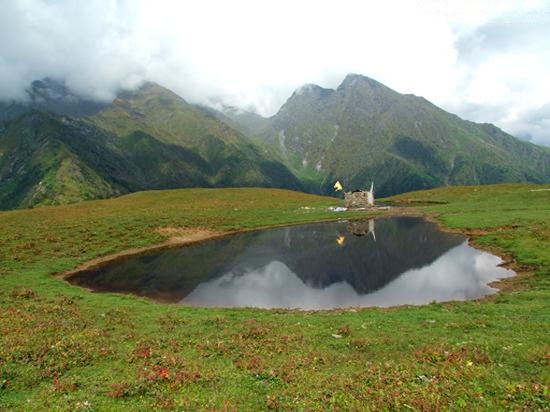
This is a short hike to help with acclimatization. Additionally, Budha Madhmaheshwar offers one of Uttarakhand's most peculiar sunrise views. in fact, the golden glow of the Chaukhamba Peaks reflected in a little lake is very amazing.
Highlights:
Himalayan sunrise
Mirror-like reflection of peaks
Acclimatization for higher altitude
📍 Day 4: Madhmaheshwar to Kachni Tal (6–7 km)
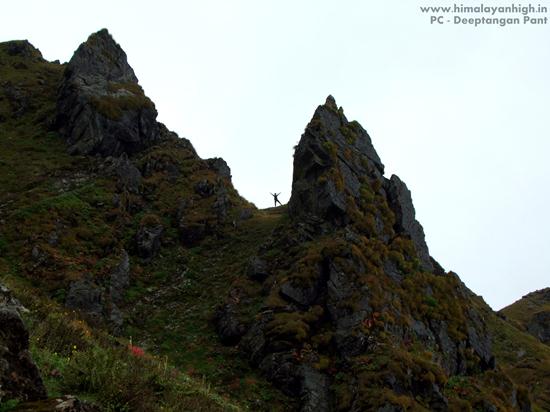
The trail gets rougher and steeper. Before arriving at Kachni Tal, a tranquil high-altitude meadow with a little lake, you travel over ridges, boulder sections, and grassy slopes.
Highlights:
Himalayan ridgeline trek
Campsites with breathtaking views
High-alpine grasslands
📍 Day 5: Kachni Tal to Pandavsera (8–10 km)
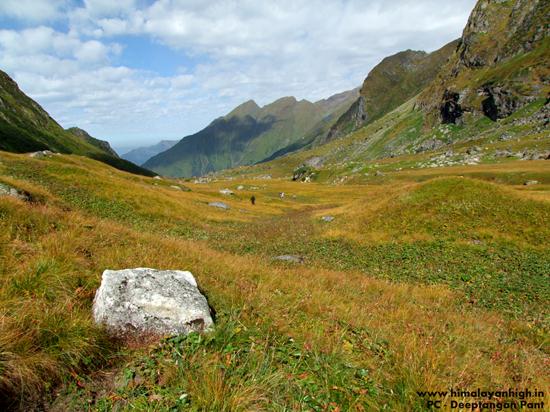
One of the hike's most beautiful days. Pandavsera is a large grassland encircled by high mountains. Legend has it that the Pandav
as grazed here when they were in exile.
Highlights:
Mythological significance
Endless green meadows
Views of Mandani and Panpatia peaks
📍 Day 6: Pandavsera to Nandi Kund Trek & Back
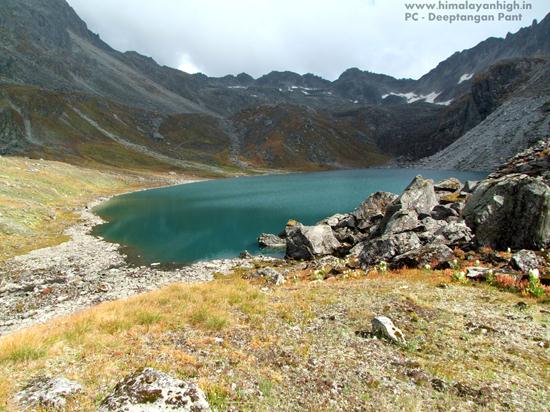
The last climb is difficult but worthwhile. You eventually arrive at Nandi Kund, a huge glacial lake that reflects the sky and other peaks, after traversing rocky ridges and glacial moraines.
Before going back to camp, take some time to appreciate the lake's tranquility and purity.
Highlights:
The sacred and pristine Nandi Kund Lake
Tranquil Himalayan setting
Excellent photography and meditation spot
📍 Day 7: Return to Ransi
Take the same path back down. As you depart with recollections of a genuinely miraculous adventure, the travel back is quicker and more satisfying.
⛰️ Scenic Highlights of the Trek
- Majestic Mountain Peaks
The trek offers close-up views of:
Chaukhamba
Mandani
Kedarnath Dome
Panpatia Glacier Region
The skyline is dominated by these peaks, particularly in the vicinity of Pandavsera and Nandi Kund.
Endless Alpine Meadows
The verdant bugyals, such as Pandavsera and Kachni Tal, resemble organic green carpets encircled by mountains.
Pristine Himalayan Lake
Nandi Kund is one of the most divine lakes in Uttarakhand because of its pristine water, glacier scenery, and spiritual atmosphere.
- Rich Flora & Fauna
The following are found along the trail:
The Himalayan monal
Blue sheep, or Bharal
Musk deer
Flowers in high altitudes, such as Brahma Kamal
🙏 Spiritual Significance
The journey has profound spiritual significance that goes beyond its natural beauty:
It is said that Nandi meditated near the lake.
Legends from the Mahabharata are associated with the region.
The road is blessed by Madhmaheshwar Temple, one of the Panch Kedar.
🎒 Difficulty Level & Who Can Join
The Nandi Kund Trek is rated as Moderate to Difficult because:
Long days of hiking
steep climbs
Elevated (up to 4,800 m)
Distant terrain
This trek is ideal for:
Travelers who are physically fit
Trekkers with experience
Those seeking a profound Himalayan experience
🛒 What to Pack
Warm clothes in layers
Trekking shoes that are waterproof
A raincoat
Poles for trekking
Sunscreen and sunglasses
Sleeping bag (if the hike operator does not supply one)
Headlamp and power bank
Carrying necessities is vital because facilities are limited.
💬 Final Thoughts
The Nandi Kund Trek is a deep Himalayan experience full with mythology, breathtaking scenery, and serene solitude—it's more than just an adventure. Every step along this path conveys a tale, from historic temples to boundless meadows and the holy lake itself. Nandi Kund is one of Uttarakhand's most rewarding high-altitude hikes for hikers looking for a unique, peaceful, and spiritually fulfilling experience.